Showing posts with label Bitcoin. Show all posts

Thursday, 31 May 2018

COULD GOVERNMENT ISSUED CRYPTOCURRENCIES BE THE FUTURE?

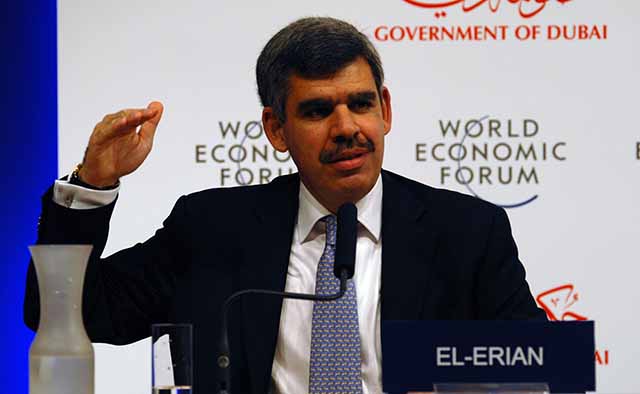
Prominent economist Mohamed El-Erian sees a future in which an “officially sanctioned” cryptocurrency will exist.

GOING CASHLESS

“We are moving away from cash,” El-Erian says. “Go to Sweden and you’ll see how fast.”

In Sweden, just 2% of the country’s transactions are conducted with cash, and that number is expected to decline further down to 0.5% by 2020. Countries like Canada, the US, and the UK show similar stats.

Despite his predictions, El-Erian understands that we are still years away from cryptocurrency US dollars:

Change in consumer habits and trust in the new medium doesn’t happen overnight. It’s not something that we’re going to see in the next three to five years.

WHO BENEFITS FROM GOVERNMENT ISSUED CRYPTO?

Governments launching their own cryptocurrencies via private blockchains seems like a smart move as the dollar and other fiat currencies continue to lose value and more citizens discover Bitcoin. Venezuela was the first major country to pull this off after suffering from a hyperinflated currency and severe economic issues.

However, given that the whole point of Bitcoin is to subvert government and bank control over an individuals money, its hard to see how a crypto dollar that tracks all of your transactions, earnings, and tax liabilities will be the favored choice by citizens. A government controlled cryptocurrency goes against the blockchain ethos of decentralization and self-governance, making it no more valuable to regular citizens than today’s fiat money.

What may become a useful crypto-currency for institutions to trade services across borders may not be what is adopted by citizens’ seeking autonomy over their spending and finances.

Despite this, countries like the US, who have a dominant position on the world stage could ensure that a government-issued cryptocurrency becomes as ubiquitous and in-demand as the current fiat US dollar.

‘BITCOIN IS OVERPRICED’

Unsurprisingly, Mohamed El-Erian is skeptical about Bitcoin’s status as a currency, and has in the past claimed that Bitcoin is overpriced and that governments “will not allow the amount of adoption that it is currently priced at.”

His comments show a fundamental lack of understanding of how the technology works, and how the act of ‘allowing’ is simply not a choice in a decentralized globally distributed system.

Perhaps El-Erian’s prediction for governments issuing their own cryptocurrencies is less about migrating away from cash and more about trying to usurp Bitcoin and maintain control over financial markets in the long term.

Bitcoin economist Saifedean Ammous has been quick to respond to El Erian’s thoughts on government-issued cryptocurrencies.

"Nothing can be both ‘government-issued’ and ‘like bitcoin’. Government currencies are already mostly digital. Making them any more ‘like Bitcoin’, by introducing cryptographic payment clearance & automated monetary policy, can only mean ending government control over them."

On an institutional level (e.g., government to government or bank to bank trading on private blockchain ledgers) it sounds like officially sanctioned cryptos would be a successful initiative, but for general user adoption, I certainly wouldn’t bet on it.

Source: http://bitcoinist.com/government-issued-cryptocurrencies-future/

Saturday, 26 May 2018

Tuesday, 20 March 2018

Top 10 Quickest Ways People Made a Fortune


Check out the 10 quickest ways people have made a fortune!!!

Is Bitcoin one? 

Watch to find out!

Sunday, 4 March 2018

The Women of Cryptocurrency

Bitcoin and other virtual currencies exhibit similar gender inequality issues as Silicon Valley, but women are slowly making an impact in this industry

If you’ve been paying any attention to the news lately, then you’ve heard the recent raucous surrounding the rollercoaster that is cryptocurrencies. Are you confused by what you’re reading and hearing? Don’t worry, so are most people—even the ones who are investing in this digital currency. There’s so much buzz floating around about this phenomenon, it’s no wonder everyone is in a tizzy over its rising and falling prices.
Warren Buffett famously advised never to invest in anything you don’t understand—yet Bitcoin investors don’t really seem to be heeding that advice. Some people have hailed this virtual currency as the money of the future, while others have dubbed it the next Ponzi scheme. Only time will tell.
Of course, Bitcoin isn’t the only game in town. There are countless substitutes to Bitcoin, which are grouped as “altcoins,” or alternative cryptocurrencies that were launched after Bitcoin. And where there are options, there are opportunities.

Women Have Entered the Sandbox

A recent study in the Harvard Business Review revealed that only 9 percent of entrepreneurs in VC-financed tech startups are women. So it’s no surprise that the roughly $460 billion digital currency market is dominated by men. Sounds like Silicon Valley all over again. But I’m happy to report that women are now getting in on the action.
In fact, four out of 30 of the largest initial coin offerings this year (through October) had female co-founders, and two of their ICOs (Initial Coin Offerings) were among the largest so far.
It’s a safe bet that women didn’t have a seat at the table when our current financial system was conceived hundreds of years ago, and now we have an opportunity to change the future with what could be a whole new system—one that rests on a decentralized model that offers added transactional privacy. While the longevity of digital currencies remains unknown and I don’t have a crystal ball to predict what might happen next, one thing is for certain: It’s a hot industry with room for a woman to rise to the top.
Let’s look at a few female trailblazers:
  • Maxine Ryan: This 25-year-old dropped out of college to launch Bitspark in Hong Kong. Its ICO, in November, raised $1.4 million.
  • Rhian Lewis: This organizer of a London-based Women in Bitcoin group provides a welcoming, friendly environment for nearly 400 women who want to learn more about Bitcoin or other cryptocurrencies.
  • Tavonia Evans: This technology veteran launched the very first ICO for $Guap, a coin aimed at recycling wealth within the Black community. She has almost 20 years of technology experience and believes that cryptocurrency could be the game changer for Black economics.

Plenty of Room to Grow

Since only 5-7 percent of cryptocurrency users are women, we still have a long way to go in this industry, ladies.
CoinDesk, an influential cryptocurrency media company, recently compiled a list for a vote on the most influential people in blockchain, which includes outsiders who’ve made an impact—such as socialite Paris Hilton and JPMorgan chief Jamie Dimon. If you’re looking for women’s names on this list, you’ll need to look hard. Only a fifth of the 153 identifiable candidates were women.
If you’re seeking new and exciting opportunities to achieve your financial dreams, then the world of cryptocurrencies might be a great platform for you to explore. Just know that the future of this marketplace is entirely unpredictable, prices are fluctuating daily and it’s a total gamble at this point. Some advisers are telling clients to stay awayunless they can afford to lose 100 percent of what they put into a cryptocurrency investment.
As Benjamin Franklin once said, “An investment in knowledge pays the best interest.” As with any investment, do your research and make sure you’re educated before you plunk down your hard-earned money.
Source: http://www.richdad.com/Resources/Rich-Dad-Financial-Education-Blog/January-2018/The-Women-of-Cryptocurrency.aspx

Wednesday, 28 February 2018

Sunday, 25 February 2018

The Crypto Craze Continues

Cryptocurrencies are becoming a popular way to pay for high-end real estate

If you turn on the news, troll the Internet or stand around the water cooler, you’re likely inundated with talk of cryptocurrencies. Bitcoin and other virtual currencies are so exciting because they are relatively new and highly volatile.
Some analysts are predicting that digital currency is the future of the world’s financial system, while others believe it’s merely a trend that will disappear. Only time will tell, of course, but its extreme fluctuations make for some very dynamic investments.
At the time of this writing, one Bitcoin is worth $10,854.42 U.S. dollars. As such, many people are buying fractions of Bitcoins—investing $50 or $100 to get their hands on a piece of this pie.

Using Bitcoin in Real Estate

Now, you might be wondering how to pay for things using cryptocurrencies—you can’t exactly use it to pay for a manicure or your skinny latte (yet). But you can use it to buy household products on Overstock.com or a hotel room on Expedia.com. In fact, there are a slew of places jumping on this bandwagon, and you can check out all the participating companies here.
But one of the ways in which Bitcoin is being used that truly fascinates me is in—you guessed it—real estate. I recently read a news story about the owner of a $45 million mansion who is willing to accept Bitcoin as partial payment for his 9,000-square-foot home. He believes that purchasing brick-and-mortar real estate might remove some of the volatility when it comes to investing in cryptocurrencies.
Part of his logic? “According to current situation, if you buy the property with cryptocurrency, it’s difficult to identify the cost of the real estate because it fluctuates so much,” he said. “The government will have a hard time to tax or put a property value on the house you are going to sell.”
That’s an interesting way of looking at things—the value of the Bitcoins he receives for the sale of his home could increase or decrease almost immediately, essentially putting him in a position where he’s getting more or less for his home than he realized.
Now, there probably aren’t a lot of potential buyers in the market for a home with this price tag, but there are more millionaires as of late thanks to cryptocurrency gains. And these new millionaires (and some are even billionaires) are no doubt looking for ways to reinvest their gains—and old-fashioned real estate may be the ideal route to go.

A Whole New Playing Field

Clearly, converting large chunks of cryptocurrency into a less-volatile asset—like real estate—is a logical choice. And it’s happening more often than you think.
Luxury real estate agent Tony Giordano says he’s fielding more and more requests to use cryptocurrency to buy and sell property—and now asks his high-end clients if they would be willing to accept digital currency. Why? More options equals more buyers. This is especially true in the luxury market, where buyers like to maintain a low profile and avoid tax issues. Remember, cryptocurrencies are still largely unregulated.
As such, it’s also important to note that finding an escrow service that handles crypto sales (vs. traditional cash) is not easy because technology is, unsurprisingly, moving faster than government regulation. So you’ll likely have to convert Bitcoin into cash in order to buy a property.
Now might be a good time to dabble with cryptocurrencies to get a feel for the market. There’s a lot to learn about digital currencies (including that Bitcoin isn’t the only game in town), so do your research and start your journey with a small investment—$20 is enough to get your feet wet.
While you may not be in the market for high-end real estate (yet), if you play your cards right, you could easily join the ranks of the new crypto millionaires popping up all around the world. And if not, you’ll get some experience buying and selling, monitoring your investments and having fun daydreaming about achieving your financial dreams.
Source: http://www.richdad.com/Resources/Rich-Dad-Financial-Education-Blog/February-2018/The-Crypto-Craze-Continues.aspx

Sunday, 11 February 2018

Saturday, 10 February 2018

BITCOIN CRASH EXPLAINED BY BITCOIN MILLIONAIRE


What are your thoughts on the recent cryptocurrency crash where we've seen Bitcoin plummet from $20,000 to as low as $5,000?

Are a crypto investor? Are we due a recovery? Even a big bounce?

Friday, 9 February 2018

The Best Documentary Ever - The Bitcoin Phenomenon


Have you heard of Bitcoin? Thought so!

Do you understand it? No? No worries! 

Check this great documentary out!

The "Experts" Are Getting Crypto All Wrong

Bitcoin peaked about a month ago, on December 17, at a high of nearly $20,000. As I write, the cryptocurrency is under $11,000... a loss of about 45%. That's more than $150 billion in lost market cap.
Cue much hand-wringing and gnashing of teeth in the crypto-commentariat. It's neck-and-neck, but I think the "I-told-you-so" crowd has the edge over the "excuse-makers."
Here's the thing: Unless you just lost your shirt on bitcoin, this doesn't matter at all. And chances are, the "experts" you may see in the press aren't telling you why.


In fact, bitcoin's crash is wonderful... because it means we can all just stop thinking about cryptocurrencies altogether.
The Death of Bitcoin...
In a year or so, people won't be talking about bitcoin in the line at the grocery store or on the bus, as they are now. Here's why.
Bitcoin is the product of justified frustration. Its designer explicitly said the cryptocurrency was a reaction to government abuse of fiat currencies like the dollar or euro. It was supposed to provide an independent, peer-to-peer payment system based on a virtual currency that couldn't be debased, since there was a finite number of them.
That dream has long since been jettisoned in favor of raw speculation. Ironically, most people care about bitcoin because it seems like an easy way to get more fiat currency! They don't own it because they want to buy pizzas or gas with it.
Besides being a terrible way to transact electronically - it's agonizingly slow - bitcoin's success as a speculative play has made it useless as a currency. Why would anyone spend it if it's appreciating so fast? Who would accept one when it's depreciating rapidly?
Bitcoin is also a major source of pollution. It takes 351 kilowatt-hours of electricity just to process one transaction - which also releases 172 kilograms of carbon dioxide into the atmosphere. That's enough to power one U.S. household for a year. The energy consumed by all bitcoin mining to date could power almost 4 million U.S. households for a year.
Paradoxically, bitcoin's success as an old-fashioned speculative play - not its envisaged libertarian uses - has attracted government crackdown.


China, South Korea, Germany, Switzerland and France have implemented, or are considering, bans or limitations on bitcoin trading. Several intergovernmental organizations have called for concerted action to rein in the obvious bubble. The U.S. Securities and Exchange Commission, which once seemed likely to approve bitcoin-based financial derivatives, now seems hesitant.
And according to Investing.com: "The European Union is implementing stricter rules to prevent money laundering and terrorism financing on virtual currency platforms. It's also looking into limits on cryptocurrency trading."
We may see a functional, widely accepted cryptocurrency someday, but it won't be bitcoin.
... But a Boost for Crypto Assets
Good. Getting over bitcoin allows us to see where the real value of crypto assets lies. Here's how.
To use the New York subway system, you need tokens. You can't use them to buy anything else... although you could sell them to someone who wanted to use the subway more than you.
In fact, if subway tokens were in limited supply, a lively market for them might spring up. They might even trade for a lot more than they originally cost. It all depends on how much people want to use the subway.
That, in a nutshell, is the scenario for the most promising "cryptocurrencies" other than bitcoin. They're not money, they're tokens - "crypto-tokens," if you will. They aren't used as general currency. They are only good within the platform for which they were designed.
If those platforms deliver valuable services, people will want those crypto-tokens, and that will determine their price. In other words, crypto-tokens will have value to the extent that people value the things you can get for them from their associated platform.


That will make them real assets, with intrinsic value - because they can be used to obtain something that people value. That means you can reliably expect a stream of revenue or services from owning such crypto-tokens. Critically, you can measure that stream of future returns against the price of the crypto-token, just as we do when we calculate the price/earnings ratio (P/E) of a stock.
Bitcoin, by contrast, has no intrinsic value. It only has a price - the price set by supply and demand. It can't produce future streams of revenue, and you can't measure anything like a P/E ratio for it.
One day it will be worthless because it doesn't get you anything real.
Ether and Other Crypto Assets Are the Future
The crypto-token ether sure seems like a currency. It's traded on cryptocurrency exchanges under the code ETH. Its symbol is the Greek uppercase Xi character. It's mined in a similar (but less energy-intensive) process to bitcoin.
But ether isn't a currency. Its designers describe it as "a fuel for operating the distributed application platform Ethereum. It is a form of payment made by the clients of the platform to the machines executing the requested operations."


Ether tokens get you access to one of the world's most sophisticated distributed computational networks. It's so promising that big companies are falling all over each other to develop practical, real-world uses for it.
Because most people who trade it don't really understand or care about its true purpose, the price of ether has bubbled and frothed like bitcoin in recent weeks.
But eventually, ether will revert to a stable price based on the demand for the computational services it can "buy" for people. That price will represent real value that can be priced into the future. There'll be a futures market for it, and exchange-traded funds (ETFs), because everyone will have a way to assess its underlying value over time. Just as we do with stocks.
What will that value be? I have no idea. But I know it will be a lot more than bitcoin.
My advice: Get rid of your bitcoin, and buy ether at the next dip.


Ted Bauman joined The Sovereign Investor Daily in 2013. As an expat who lived in South Africa for 25 years, Ted specializes in asset protection and international migration. Read more of what he has to say about offshore living here.
Article Source: https://EzineArticles.com/expert/Ted_Bauman/1964192
Article Source: http://EzineArticles.com/9871792

Tuesday, 30 January 2018

How To Invest in Cryptocurrency: Super Beginners Guide


Is cryptocurrency a bubble or the next big thing? Do you understand it?

Find out how to invest in this exciting new asset class in this short video!

Don't get left behind!

Thursday, 25 January 2018

Bitcoin Explained & Made Simple | Guardian Animations


What the hell is Bitcoin anyway? There are so many different crypto assets these days, but at 9 years old BTC is defiantly the oldest and most well established.

Check out this great little video explaining the inner workings of this exciting new asset class!

Friday, 5 January 2018

My Top 3 Cryptocurrencies for 2018


What are the top 3 cryptocurrencies you're gunning for in 2018? 

Which ones do you think will shoot to the moon?

Which ones do you think will plummet to zero?

Tuesday, 2 January 2018

Andreas M. Antonopoulos Educates Senate of Canada About Bitcoin (Oct 8,...


More Andreas!!!

Background on the “Study on the use of digital currency”:

In Canada, the public debate surrounding Bitcoin and cryptocurrencies is currently being formalized as the official “Study on the use of digital currency”, a consultative exercise conducted at the initiative of the Senate of Canada’s Banking, Trade and Commerce committee.

Although the Senate of Canada exerts less authority than the House of Commons, its standing committees have proven to be an influential source of expertise and opinion. It also enjoys considerable international attention: according to Stuart Hoegner, general counsel at the Bitcoin Alliance, “no other parliamentary body in the world has publicly canvassed the breadth of materials and opinion that this committee has”.

Monday, 1 January 2018

Andreas Antonopoulos - The Death of Money - PART 1/2 | London Real


The death of money? Andreas Antonopoulos is one of the World's leading experts on cryptocurrencies and has been living using Bitcoin for the last 3 years. 

Are we standing at the dawn of a new age? Is this THE biggest financial paradigm shift the World has seen since the introduction of the Gold Standard?

Check out Part1 of 2 NOW!

Sunday, 31 December 2017

The Best Documentary Ever - The Bitcoin Phenomenon


What on Earth is Bitcoin anyway? How does it work? 

Is it really worth anything?

Are people investing, or gambling?

Over 1 million people answered these questions by watching this documentary - check it out and let us know what you think!

Saturday, 23 December 2017

Blockchain is Eating Wall Street | Alex Tapscott | TEDxSanFrancisco


Blockchain is quite literally changing the face of the World as we know it - so many different applications beyond digital assets and finance with Ethereum's Smart Contracts and loads of other great technology that's currently being developed!

How do you think blockchain technology will affect you in the next decade?

Thursday, 21 December 2017

Buying Into Bitcoins


With the 21st century demand for quick and big profits, one of the most controversial new investment vehicles has been Bitcoins, the virtual currency. It's gained controversy partly because of its volatility, partly through the instability of Bitcoin exchanges and partly because their in-traceability meant they were a favored payment method for criminals.

Things are changing and after a particularly volatile spell in which one of the main exchanges, MtGox, filed for bankruptcy, the currency seems to have settled into a more stable pattern allowing investors to be able to take a measured view of whether to risk their money in a currency that technically doesn't exist.

Volatility

Although Bitcoins are becoming increasingly popular, the market is still quite small, meaning that good and bad news can have a disproportionate effect on the price. The long term outlook for Bitcoins is potentially good, meaning that the upside on price is stronger than the potential for a decline over the long term. Most brokers recommend that you consider Bitcoin a medium to long term investment because of its volatility. Think of it in terms of real estate. No one buys and sells houses many times a day and there can be significant drops in property prices but the long term trend for property prices is usually up. The same can be said for Bitcoins. Whilst there is a significant daily trade in the currency, many Bitcoins are held as investments as analysts believe that it's likely the price of Bitcoins will rise long term because they are becoming more widely accepted.


Influencers

As with all financial instruments, prices are influenced by supply and demand. Bitcoins are no different but what has caused big fluctuations in price has been the unusual nature of the news that influenced the supply and demand:

• The bankruptcy of MtGox, one of the biggest Bitcoin exchanges

• The closing down of Silk Road which allegedly accepted Bitcoins for drug trading

• The disclosure by the US government that, despite the negative uses of Bitcoins, they believed that the currency had a future

• The media has also stirred up interest by reporting on milestones in the currency's rise and fall, trumpeting the rise to over $1000 and its subsequent plummet on bad publicity.

Generally the advice on investing in Bitcoins is to sit and watch the market for a couple of weeks to get an idea of how the currency trades, its volatility and trends. It's difficult to find rumor that hasn't instantly affected the value, so many suggest investing a small amount and simply watching for opportunities, a little like setting take profit levels with shares and Forex, you can do the same on Bitcoins; it's just a bit longer process and a little less automated.

Just like with any investment, the value can fall, and events like the collapse of MtGox and the closing down of Silk Road, negatively affected Bitcoins; not just because demand was reduced but also because Bitcoins were falsely linked with the companies by urban myth. The market seems to be becoming more regular, but not necessarily regulated, as more exchanges come online. Some of the exchanges will go the same way as MtGox but others will consolidate and become stronger and more reliable. No doubt official regulation will be applied to Bitcoins in due course at which time the volatility is likely to reduce.

Bitcoins represent an exciting and potentially lucrative medium to long term investment vehicle. Exciting because it hasn't yet been accepted into the mainstream of currencies or investment vehicles. One thing investors like about Bitcoins is their conviction to prospects as was in gold.


FXLORDS offers a full range of premium services such as Forex trading signals, Forex managed accounts and Forex training courses to give our clients the opportunity to benefit from day-to-day Forex market trading, and so, became one of the finest sources of financial services and information.

Article Source: https://EzineArticles.com/expert/Razi_Hammouda/1826687

Article Source: http://EzineArticles.com/9755025

Sunday, 17 December 2017

7 Wealth Secrets

Money is power; it can be a vital source of happiness and a paramount entity for some people. The gurus can give you hundreds of secrets to becoming wealthy. But, the catch to the "get rich soon" equation is simply a law of attraction. On the contrary, some people ruin their lives by becoming hungry for money that results in destroying and harming themselves and others.


Although, a healthy monetary asset is essential to survive in the world, which also demands a comprehensive understanding of how the money game operates. We leave you with 7 wealth secrets that will enhance your income:

Acceptance:

Firstly, to understand the game, it is vital that you acknowledge the universal truth, which is to acquire heaps of money. Once the mindset changes, you can strive to make your first million. Setting smaller and achievable goals can help you get focused.

Don't be Negative about it:

Secondly, try not to utter phrases like "I am poor". Picturing yourself to be rich can attract a lot of resources. It is vital to have an empowering mindset, which says; through my mental capacity and hard work I can achieve any task. The first person to convince in this situation would be you.


Taking your own wealth as a responsibility:

For instance, by creating wealth and jobs for others, you would create some for yourself. Not only that, you are also responsible for your family, stakeholders, and employers. A positive contribution to the society is only possible when you simultaneously have more than one income stream.

Find a mentor:

Stick to like-minded friends and family members who are equally passionate about wealth. Searching for an industry mentor is probably the best thing you could do. By far some of the best teachers of life lessons are these mentors. Making excellent friends allows you to create an aura of success around you.

Make an outstanding use of all the resources that you have:

Time is a virtually the best resource, it is an incalculable asset. Time is everywhere, you have a lot of it, but how do you spend it?

Financial resources are secondary when we talk about time, therefore we must not waste it. You can make principles for smart time management. If you work well in the morning, then allocate it to time-consuming tasks.


Make a habit of saving:

Rest assured, the money that you earn will not last, so it is better to start investing in stocks, property, and gold. Hiring a team of financial advisors can be an option later on.

Make money flow through various sources:

Further, having more than one source of income would be a preeminent task. Once you have started to pay you bills and taxes, then you can focus on reinvesting the money into investment schemes. Opportunities would start to flow in your direction, with plenty of options as a back up.

By applying the rules mentioned above, you can achieve a sound financial independence. The law of attraction only works if you do. It clearly states that you can bring positivity in your life by focusing on positive thoughts. Likewise, remember, "What you seek is seeking you".


Saving for the Future While Paying Off Debt

How can you save for the future when you're still paying off the past?