Showing posts with label Cryptocurrency. Show all posts

Thursday, 31 May 2018

COULD GOVERNMENT ISSUED CRYPTOCURRENCIES BE THE FUTURE?

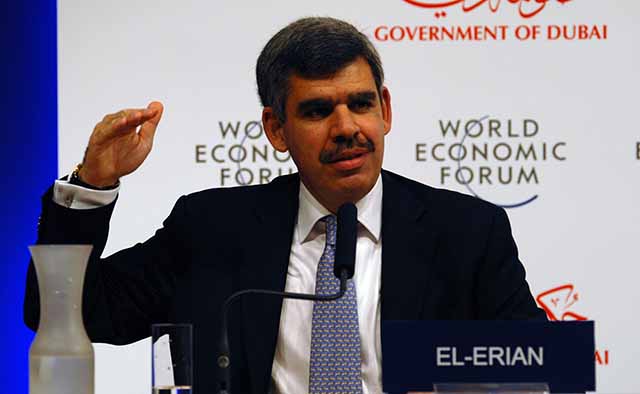
Prominent economist Mohamed El-Erian sees a future in which an “officially sanctioned” cryptocurrency will exist.

GOING CASHLESS

“We are moving away from cash,” El-Erian says. “Go to Sweden and you’ll see how fast.”

In Sweden, just 2% of the country’s transactions are conducted with cash, and that number is expected to decline further down to 0.5% by 2020. Countries like Canada, the US, and the UK show similar stats.

Despite his predictions, El-Erian understands that we are still years away from cryptocurrency US dollars:

Change in consumer habits and trust in the new medium doesn’t happen overnight. It’s not something that we’re going to see in the next three to five years.


WHO BENEFITS FROM GOVERNMENT ISSUED CRYPTO?

Governments launching their own cryptocurrencies via private blockchains seems like a smart move as the dollar and other fiat currencies continue to lose value and more citizens discover Bitcoin. Venezuela was the first major country to pull this off after suffering from a hyperinflated currency and severe economic issues.

However, given that the whole point of Bitcoin is to subvert government and bank control over an individuals money, its hard to see how a crypto dollar that tracks all of your transactions, earnings, and tax liabilities will be the favored choice by citizens. A government controlled cryptocurrency goes against the blockchain ethos of decentralization and self-governance, making it no more valuable to regular citizens than today’s fiat money.

What may become a useful crypto-currency for institutions to trade services across borders may not be what is adopted by citizens’ seeking autonomy over their spending and finances.

Despite this, countries like the US, who have a dominant position on the world stage could ensure that a government-issued cryptocurrency becomes as ubiquitous and in-demand as the current fiat US dollar.

‘BITCOIN IS OVERPRICED’

Unsurprisingly, Mohamed El-Erian is skeptical about Bitcoin’s status as a currency, and has in the past claimed that Bitcoin is overpriced and that governments “will not allow the amount of adoption that it is currently priced at.”

His comments show a fundamental lack of understanding of how the technology works, and how the act of ‘allowing’ is simply not a choice in a decentralized globally distributed system.

Perhaps El-Erian’s prediction for governments issuing their own cryptocurrencies is less about migrating away from cash and more about trying to usurp Bitcoin and maintain control over financial markets in the long term.

Bitcoin economist Saifedean Ammous has been quick to respond to El Erian’s thoughts on government-issued cryptocurrencies.

"Nothing can be both ‘government-issued’ and ‘like bitcoin’. Government currencies are already mostly digital. Making them any more ‘like Bitcoin’, by introducing cryptographic payment clearance & automated monetary policy, can only mean ending government control over them."

On an institutional level (e.g., government to government or bank to bank trading on private blockchain ledgers) it sounds like officially sanctioned cryptos would be a successful initiative, but for general user adoption, I certainly wouldn’t bet on it.

Source: http://bitcoinist.com/government-issued-cryptocurrencies-future/

Tuesday, 29 May 2018

LET YOUR MONEY GROW


There is one simple thing that separates the rich from the poor – this one principal is the reason the rich build more and more wealth, and the poor get even poorer, and traditional streams of education fail to teach our youngsters meaning most are faced with having to figure it out for themselves… and most never do.
But first, let’s look at defining the problem in simple terms so we’re all on the same page – what’s needed is some basic definitions of common terms that are often misunderstood.
One of those big problems we face as a society in this modern age is debt. More specifically – bad debt.
There are two types of debt you can have – good debt and bad debt. The difference? Well, the simple defining difference is that bad debt is credit you obtain and then use to purchase liabilities – or several liabilities. This could be taking out a loan for a new car, or purchasing this years holiday on your credit card. Good debt is credit that you leverage in order to purchase assets – this could be taking out a mortgage to purchase a rental property that’s going to return you a second, almost passive income.
The first thing we should probably clear up is the definition of an asset and a liability – they are not what most people think they are! For example, the house that you own and live in – is it a liability or an asset? Let’s make the assumption that you’ve been lucky to pay off your mortgage and you own it outright – how would you answer that question bearing that in mind?
Most people believe their home is an asset – especially if they have no mortgage on it. How can it be a liability when I haven’t got any credit to support it’s ownership and I have a store of value in the property’s equity? Well, according to Rich Dad Poor Dad, the simple definition of a liability is something that costs you money to own, and an asset is something that you own that provides an income over and above the expenses incurred to own it.
So, in the case of your house, unless you’re renting it out and making a profit, it’s a liability – it costs you money to own it and live there! You pay water and electricity bills to keep it operational, you pay council tax for the pleasure of it existing within a certain jurisdiction, and you probably pay insurance to protect the potential downside. If you’re not charging rent to someone to live there over and above YOUR costs then it’s costing you to own it. It’s worth mentioning also that if you rent it out but don’t make enough from the rent you’re charging to cover the expenses then it’s still a liability – the defining difference is whether it achieves positive cashflow or not.
Hold on, I hear you cry, but I don’t have a mortgage and I can sell my property for hundreds of thousands of pounds if I wanted to so it’s an asset because when I sell it I’ll make lots of money! Erm, not quite. You see, you only realise the paper value stored in a property like that once you sell it… and you can only sell it for what someone is prepared to pay. For example, you might have been unfortunate in a relationship and going through divorce where you need to sell quickly – you’re a highly motivated seller, and there are no buyers in the market for your type of property who are prepared to pay what you want to sell it for. All of a sudden, the value in your assets diminishes considerably simple because of someone else’s perception of value.. which could be drastically different to yours! You only realise the value in an asset like that at the point of sale, and there’s no guarantee you’ll find any buyers at the time you’re looking to sell, and there’s no guarantee that if you find a willing buyer that they’ll want to pay what you think it’s worth. This doesn’t sound like a very reliable asset to me – especially given the potential return can so easily change based on multiple variables that are completely out of your control. Yes – you might sell and make a profit, but you might equally have to sell at a loss, and you won’t know which it’s going to be until the point of sale.
Now that we’ve clearly defined good and bad credit, and the definition of an asset and a liability, let’s have a look at the key problem most people face when it comes to finances – financial education.
The one key difference between the rich and the poor is this; the rich know how to master their money and create assets that provide multiple streams of income – more simply, they understand the art and the science of putting their money to work in a way that means their money makes them more money without the controlling person having to exchange time for more money.
But this is exactly the opposite of what we’re taught in school, where the focus is on finding a skill, becoming qualified, and then finding a position where you can exchange your time for money for the rest of your life.
Okay, but what’s wrong with that?
Well, nothing if that approach aligns with your values and allows you to achieve your goals in life. However, the key limitation with this approach is this – you only have 24 hours in a day like everyone else, so what happens when you reach a point where you’re exchanging all those hours for an hourly wage? Well, when there’s no more hours in the day to exchange, you’re not only burnt out and unfulfilled because you have no time to direct towards the things you love in life (let’s face it, most people are far from doing a job they love), but you have now hit your earnings ceiling. How do you earn more when there’s no more time to exchange? This is the key limiting problem with this approach.
Yes, most of us will have to start with this inefficient exchange in order to generate our first income, but it’s what we do with the fruits of our labour that really defines where we’re going to mature into wealthy people or poor people. For those of us who have been lucky enough to have some financial education, we start to do things with our money that let it grow all on it’s own. For those who don’t, they spend all their spare money on holidays, new gadgets, and toys – aka liabilities!
This behaviour sends us into a downwards spiral that can be extremely difficult to get out of. You earn money, and use that money to buy liabilities. Those liabilities increase your monthly outgoings, meaning you have to exchange more time for money to increase your income so you can continue to service the new liabilities you have purchased. You increase your income further so you again have some surplus (but you’re now working 12 hours days and barely seeing your family), and then you use that surplus to purchase more liabilities… and so the vicious cycle continues. Can you see now why this behaviour is so destructive to people’s finances? Can you see why we have such a problem with bad debt these days? All because financial education is considered unimportant by our educational institutions. This needs to change, and this change starts with you educating yourself, so you can go on to educate others and set the next generation up for greater levels of financial success.
So, how do the wealthy grow their money?
There are multiple strategies people use, but they can all be classed as one form of investment or another. You could invest in stocks and shares that not only appreciate in value but that pay you a dividend throughout the year whilst you own them. You could invest in the wild west market of crypto-currencies and benefit for the massive bullish gains we’ve seen in those markets in recent years (I was trading Bitcoin at $900 at the start of 2017, and it’s now broken right through $10,000 – all in under 12 months). You could put your money into cash-flowing investment properties, or you could either start your own business or invest in one.
There are so many strategies you can employ to make your money work for you, rather than you working for money. All it takes is the commitment to educate yourself in whatever vehicle you choose and get started.
I’ve written several blogs on trading and investing that you can find by searching those tags so please feel free to check those out to get some more information on these strategies – there’s also loads of great resources on-line, but there’s also a lot of shit. Be careful and do thorough research from reputable sources.
You can also join my trading education group on Facebook by clicking the following link: LG Trading
You can find some of my trading and investing blogs at the links below:


Enjoy! Please drop me a comment if there’s additional content you’d find value in me covering on this subject!
Source: https://littlegreysays.com/2017/11/29/let-your-money-grow/ 

Saturday, 26 May 2018

Friday, 25 May 2018

GDPR and Blockchain: How the US’ Lack of Preparation Could Swing the Balance of Power to Europe

This op-ed on GDPR and blockchain was written by Robert Chu — CEO of Embleema, the patient-driven healthcare blockchain, and Former SVP at IMS Health (Now IQVIA) — and Alexis Normand, former Head of B2B of Nokia Digital Health


Internet privacy advocates are surely disappointed by Mark Zuckerberg’s mid-April performance in front of the US Senate. After Cambridge Analytica misused 87 Million Facebook users’ accounts for political purposes, the young billionaire demonstrated that Internet platforms do not know how to regulate themselves. Asked by a senator about the nature of his business, Zuckerberg responded simply, “We run ads”.

It seems of little concern to Facebook whether our data defines us as consumers, patients or citizens. Asked about which rules would seem more desirable, Zuck barely conceded that the General Regulation on Data Protection (GDPR) which comes into force in Europe at the end of May, offered “many good things”. However, It’s not clear what there is to “like” for Facebook.

2018, thus far, really has been the year where data privacy and how our data is being utilized by technology companies has come to the forefront of media and the public’s consciousness. As European companies ready themselves for GDPR May 25th kickoff, the world has been made well aware of the Cambridge Analytica/Facebook scandal and the Russian meddling in the US Presidential election, with data-driven advertising being their weapon of choice. But this is not just an issue for 2018 — 15.5 million Electronic Medical Records were breached in the US in 2016 according to the US Department of Health and Human Services.

GDPR imposes costly and significant obligations on platforms to avoid abusive data harvesting: there is “clear and explicit” consent to Terms & Conditions. These will limit the collection of information to only that which is necessary for the service to run. This feels like the sword of Damocles is hanging over the heads of Facebook and Google because nobody uses their services to be profiled, but the old adage “you are not the customer, you are the product” has never rang truer.“We run ads”: Facebook CEO Mark Zuckerberg

GDPR also establishes a “right to be forgotten”, to have embarrassing or damaging material taken down and erased from the public domain. Companies will need to provide a record of data processing, which generates significant overhead. The ability to hold on to one’s data history will become a right in Europe, the same way one can keep hold of the same mobile phone number when changing service providers. In health, the portability of patient records will facilitate the coordination of care, including treatment for complex diseases. 

Facebook has since admitted that it would not implement these rules for its US users and has gone to great lengths to reduce its exposure to GDPR. It is also possible regulators are increasingly reluctant to weaken US tech giants as the pressure from China increases. The Red State is now on par with the United States in terms of number of patents in artificial intelligence (AI). Its president Xi Jingping made AI a centerpiece of his Made in China Plan for 2025, aiming to take world leadership. AI has become a security issue whose importance goes beyond our private lives.

Europe has lost the AI battle, but is serious about Blockchain & Privacy.

Like Don Quixote, Europe wants to be the moral flag bearer for consumer rights, holding firm the belief that the GDPR and defense of privacy will in time garner a competitive edge. If the argument was only audible in Mountain View or Shenzen, perhaps the Masters of AI & the Universe would shine a smile. But for how long?

What if Europe, like the “knight with the sad face”, was actually visionary? Blockchain, as a breakthrough technology is already reshuffling cards. “History has more imagination than men”, said Lenin who knew a thing or two about revolutions. The hype should not make us blind to the profound transformation operated by Blockchain, the technology behind Bitcoin.

The First Age of the Internet was that of information. The constitution of databases, search engines, and the combined knowledge of users, together brought down transaction costs and freed many segments of the economy from imperfect information and geographic distance. By monopolizing these technologies, US tech giants captured the benefits of all these efficiency gains.

We are entering a Second Age, that of the “Internet of Currency” or its equivalent, the exchange of certified information. Blockchain is a peer-to-peer IT infrastructure that records a transaction between two parties in real time for all participants in a network so that it becomes tamper-proof and immutable. It offers the means to certify, without any third party, an exchange of information, which can also be an economic transaction. Vitalik Buterin, the founder of Ethereum, a development platform for Blockchain apps summarizes: “While most technologies aim to automate workers on the periphery performing repetitive tasks, Blockchain automates the center. Instead of putting the taxi driver out of work, it puts Uber out of work and lets the driver work directly for the client. “Europe is far more serious about data privacy than the US, the authors argue.

The disruption goes further, because the very business model of the company which operates the network switches from maximizing profit to maximizing exchanges between nodes in the network. Indeed, blockchain companies act like Central Banks within the economy they generate, paying themselves by issuing tokens, like Disneyland gives you vouchers to use on different rides.

Taking a familiar example in healthcare, Blockchain offers the patient a rare opportunity to share their data seamlessly with a doctor or laboratory, being compensated automatically for each exchange. This is a paradigm change for the data exchange industry, which currently lets large data brokers take the bigger slice of a $15billion cake, leaving the patient with zero compensation. In short, Blockchain would give patients back ownership over their health data.

In all sectors where traceability is critical, blockchain essentially removes the need for a trusted or not so trusted third party, and any “rent” that he might perceive from his privileged position as owner of the marketplace. Blockchain reduces the cost of coordination between stakeholders of a network. This could be the demise of Silicon Valley’s centralization of data and power, and perhaps even of modern capitalism as we know it. Had Karl Marx lived in the time of blockchain, he would finally have found a way to free workers from companies becoming monopolies and capturing all the “added-value”.

A new divide is emerging between AI-powered platforms, which are hostile by design to privacy protection, and blockchain-powered decentralized network: a conflict between monopolies and libertarians, Big Brother and Crypto, the United States and Europe. This is good news for individuals and end users who can no longer simply trust institutions to protect property over data. This is good news for Europe, which can reset the meter by combining GDPR and Blockchain. This is very bad news for Silicon Valley. It invented the sharing economy of your physical assets that AirBnB and Amazon have captured the better share of. Now, old Europa is writing the rules for the sharing economy of your digital assets. Tomorrow, we will all be the CEOs of our data.

Sunday, 4 March 2018

The Women of Cryptocurrency

Bitcoin and other virtual currencies exhibit similar gender inequality issues as Silicon Valley, but women are slowly making an impact in this industry

If you’ve been paying any attention to the news lately, then you’ve heard the recent raucous surrounding the rollercoaster that is cryptocurrencies. Are you confused by what you’re reading and hearing? Don’t worry, so are most people—even the ones who are investing in this digital currency. There’s so much buzz floating around about this phenomenon, it’s no wonder everyone is in a tizzy over its rising and falling prices.
Warren Buffett famously advised never to invest in anything you don’t understand—yet Bitcoin investors don’t really seem to be heeding that advice. Some people have hailed this virtual currency as the money of the future, while others have dubbed it the next Ponzi scheme. Only time will tell.
Of course, Bitcoin isn’t the only game in town. There are countless substitutes to Bitcoin, which are grouped as “altcoins,” or alternative cryptocurrencies that were launched after Bitcoin. And where there are options, there are opportunities.

Women Have Entered the Sandbox

A recent study in the Harvard Business Review revealed that only 9 percent of entrepreneurs in VC-financed tech startups are women. So it’s no surprise that the roughly $460 billion digital currency market is dominated by men. Sounds like Silicon Valley all over again. But I’m happy to report that women are now getting in on the action.
In fact, four out of 30 of the largest initial coin offerings this year (through October) had female co-founders, and two of their ICOs (Initial Coin Offerings) were among the largest so far.
It’s a safe bet that women didn’t have a seat at the table when our current financial system was conceived hundreds of years ago, and now we have an opportunity to change the future with what could be a whole new system—one that rests on a decentralized model that offers added transactional privacy. While the longevity of digital currencies remains unknown and I don’t have a crystal ball to predict what might happen next, one thing is for certain: It’s a hot industry with room for a woman to rise to the top.
Let’s look at a few female trailblazers:
  • Maxine Ryan: This 25-year-old dropped out of college to launch Bitspark in Hong Kong. Its ICO, in November, raised $1.4 million.
  • Rhian Lewis: This organizer of a London-based Women in Bitcoin group provides a welcoming, friendly environment for nearly 400 women who want to learn more about Bitcoin or other cryptocurrencies.
  • Tavonia Evans: This technology veteran launched the very first ICO for $Guap, a coin aimed at recycling wealth within the Black community. She has almost 20 years of technology experience and believes that cryptocurrency could be the game changer for Black economics.

Plenty of Room to Grow

Since only 5-7 percent of cryptocurrency users are women, we still have a long way to go in this industry, ladies.
CoinDesk, an influential cryptocurrency media company, recently compiled a list for a vote on the most influential people in blockchain, which includes outsiders who’ve made an impact—such as socialite Paris Hilton and JPMorgan chief Jamie Dimon. If you’re looking for women’s names on this list, you’ll need to look hard. Only a fifth of the 153 identifiable candidates were women.
If you’re seeking new and exciting opportunities to achieve your financial dreams, then the world of cryptocurrencies might be a great platform for you to explore. Just know that the future of this marketplace is entirely unpredictable, prices are fluctuating daily and it’s a total gamble at this point. Some advisers are telling clients to stay awayunless they can afford to lose 100 percent of what they put into a cryptocurrency investment.
As Benjamin Franklin once said, “An investment in knowledge pays the best interest.” As with any investment, do your research and make sure you’re educated before you plunk down your hard-earned money.
Source: http://www.richdad.com/Resources/Rich-Dad-Financial-Education-Blog/January-2018/The-Women-of-Cryptocurrency.aspx

Wednesday, 28 February 2018

Sunday, 25 February 2018

The Crypto Craze Continues

Cryptocurrencies are becoming a popular way to pay for high-end real estate

If you turn on the news, troll the Internet or stand around the water cooler, you’re likely inundated with talk of cryptocurrencies. Bitcoin and other virtual currencies are so exciting because they are relatively new and highly volatile.
Some analysts are predicting that digital currency is the future of the world’s financial system, while others believe it’s merely a trend that will disappear. Only time will tell, of course, but its extreme fluctuations make for some very dynamic investments.
At the time of this writing, one Bitcoin is worth $10,854.42 U.S. dollars. As such, many people are buying fractions of Bitcoins—investing $50 or $100 to get their hands on a piece of this pie.

Using Bitcoin in Real Estate

Now, you might be wondering how to pay for things using cryptocurrencies—you can’t exactly use it to pay for a manicure or your skinny latte (yet). But you can use it to buy household products on Overstock.com or a hotel room on Expedia.com. In fact, there are a slew of places jumping on this bandwagon, and you can check out all the participating companies here.
But one of the ways in which Bitcoin is being used that truly fascinates me is in—you guessed it—real estate. I recently read a news story about the owner of a $45 million mansion who is willing to accept Bitcoin as partial payment for his 9,000-square-foot home. He believes that purchasing brick-and-mortar real estate might remove some of the volatility when it comes to investing in cryptocurrencies.
Part of his logic? “According to current situation, if you buy the property with cryptocurrency, it’s difficult to identify the cost of the real estate because it fluctuates so much,” he said. “The government will have a hard time to tax or put a property value on the house you are going to sell.”
That’s an interesting way of looking at things—the value of the Bitcoins he receives for the sale of his home could increase or decrease almost immediately, essentially putting him in a position where he’s getting more or less for his home than he realized.
Now, there probably aren’t a lot of potential buyers in the market for a home with this price tag, but there are more millionaires as of late thanks to cryptocurrency gains. And these new millionaires (and some are even billionaires) are no doubt looking for ways to reinvest their gains—and old-fashioned real estate may be the ideal route to go.

A Whole New Playing Field

Clearly, converting large chunks of cryptocurrency into a less-volatile asset—like real estate—is a logical choice. And it’s happening more often than you think.
Luxury real estate agent Tony Giordano says he’s fielding more and more requests to use cryptocurrency to buy and sell property—and now asks his high-end clients if they would be willing to accept digital currency. Why? More options equals more buyers. This is especially true in the luxury market, where buyers like to maintain a low profile and avoid tax issues. Remember, cryptocurrencies are still largely unregulated.
As such, it’s also important to note that finding an escrow service that handles crypto sales (vs. traditional cash) is not easy because technology is, unsurprisingly, moving faster than government regulation. So you’ll likely have to convert Bitcoin into cash in order to buy a property.
Now might be a good time to dabble with cryptocurrencies to get a feel for the market. There’s a lot to learn about digital currencies (including that Bitcoin isn’t the only game in town), so do your research and start your journey with a small investment—$20 is enough to get your feet wet.
While you may not be in the market for high-end real estate (yet), if you play your cards right, you could easily join the ranks of the new crypto millionaires popping up all around the world. And if not, you’ll get some experience buying and selling, monitoring your investments and having fun daydreaming about achieving your financial dreams.
Source: http://www.richdad.com/Resources/Rich-Dad-Financial-Education-Blog/February-2018/The-Crypto-Craze-Continues.aspx

Sunday, 11 February 2018

Saturday, 10 February 2018

BITCOIN CRASH EXPLAINED BY BITCOIN MILLIONAIRE


What are your thoughts on the recent cryptocurrency crash where we've seen Bitcoin plummet from $20,000 to as low as $5,000?

Are a crypto investor? Are we due a recovery? Even a big bounce?

Friday, 9 February 2018

The Best Documentary Ever - The Bitcoin Phenomenon


Have you heard of Bitcoin? Thought so!

Do you understand it? No? No worries! 

Check this great documentary out!

The "Experts" Are Getting Crypto All Wrong

Bitcoin peaked about a month ago, on December 17, at a high of nearly $20,000. As I write, the cryptocurrency is under $11,000... a loss of about 45%. That's more than $150 billion in lost market cap.
Cue much hand-wringing and gnashing of teeth in the crypto-commentariat. It's neck-and-neck, but I think the "I-told-you-so" crowd has the edge over the "excuse-makers."
Here's the thing: Unless you just lost your shirt on bitcoin, this doesn't matter at all. And chances are, the "experts" you may see in the press aren't telling you why.


In fact, bitcoin's crash is wonderful... because it means we can all just stop thinking about cryptocurrencies altogether.
The Death of Bitcoin...
In a year or so, people won't be talking about bitcoin in the line at the grocery store or on the bus, as they are now. Here's why.
Bitcoin is the product of justified frustration. Its designer explicitly said the cryptocurrency was a reaction to government abuse of fiat currencies like the dollar or euro. It was supposed to provide an independent, peer-to-peer payment system based on a virtual currency that couldn't be debased, since there was a finite number of them.
That dream has long since been jettisoned in favor of raw speculation. Ironically, most people care about bitcoin because it seems like an easy way to get more fiat currency! They don't own it because they want to buy pizzas or gas with it.
Besides being a terrible way to transact electronically - it's agonizingly slow - bitcoin's success as a speculative play has made it useless as a currency. Why would anyone spend it if it's appreciating so fast? Who would accept one when it's depreciating rapidly?
Bitcoin is also a major source of pollution. It takes 351 kilowatt-hours of electricity just to process one transaction - which also releases 172 kilograms of carbon dioxide into the atmosphere. That's enough to power one U.S. household for a year. The energy consumed by all bitcoin mining to date could power almost 4 million U.S. households for a year.
Paradoxically, bitcoin's success as an old-fashioned speculative play - not its envisaged libertarian uses - has attracted government crackdown.


China, South Korea, Germany, Switzerland and France have implemented, or are considering, bans or limitations on bitcoin trading. Several intergovernmental organizations have called for concerted action to rein in the obvious bubble. The U.S. Securities and Exchange Commission, which once seemed likely to approve bitcoin-based financial derivatives, now seems hesitant.
And according to Investing.com: "The European Union is implementing stricter rules to prevent money laundering and terrorism financing on virtual currency platforms. It's also looking into limits on cryptocurrency trading."
We may see a functional, widely accepted cryptocurrency someday, but it won't be bitcoin.
... But a Boost for Crypto Assets
Good. Getting over bitcoin allows us to see where the real value of crypto assets lies. Here's how.
To use the New York subway system, you need tokens. You can't use them to buy anything else... although you could sell them to someone who wanted to use the subway more than you.
In fact, if subway tokens were in limited supply, a lively market for them might spring up. They might even trade for a lot more than they originally cost. It all depends on how much people want to use the subway.
That, in a nutshell, is the scenario for the most promising "cryptocurrencies" other than bitcoin. They're not money, they're tokens - "crypto-tokens," if you will. They aren't used as general currency. They are only good within the platform for which they were designed.
If those platforms deliver valuable services, people will want those crypto-tokens, and that will determine their price. In other words, crypto-tokens will have value to the extent that people value the things you can get for them from their associated platform.


That will make them real assets, with intrinsic value - because they can be used to obtain something that people value. That means you can reliably expect a stream of revenue or services from owning such crypto-tokens. Critically, you can measure that stream of future returns against the price of the crypto-token, just as we do when we calculate the price/earnings ratio (P/E) of a stock.
Bitcoin, by contrast, has no intrinsic value. It only has a price - the price set by supply and demand. It can't produce future streams of revenue, and you can't measure anything like a P/E ratio for it.
One day it will be worthless because it doesn't get you anything real.
Ether and Other Crypto Assets Are the Future
The crypto-token ether sure seems like a currency. It's traded on cryptocurrency exchanges under the code ETH. Its symbol is the Greek uppercase Xi character. It's mined in a similar (but less energy-intensive) process to bitcoin.
But ether isn't a currency. Its designers describe it as "a fuel for operating the distributed application platform Ethereum. It is a form of payment made by the clients of the platform to the machines executing the requested operations."


Ether tokens get you access to one of the world's most sophisticated distributed computational networks. It's so promising that big companies are falling all over each other to develop practical, real-world uses for it.
Because most people who trade it don't really understand or care about its true purpose, the price of ether has bubbled and frothed like bitcoin in recent weeks.
But eventually, ether will revert to a stable price based on the demand for the computational services it can "buy" for people. That price will represent real value that can be priced into the future. There'll be a futures market for it, and exchange-traded funds (ETFs), because everyone will have a way to assess its underlying value over time. Just as we do with stocks.
What will that value be? I have no idea. But I know it will be a lot more than bitcoin.
My advice: Get rid of your bitcoin, and buy ether at the next dip.


Ted Bauman joined The Sovereign Investor Daily in 2013. As an expat who lived in South Africa for 25 years, Ted specializes in asset protection and international migration. Read more of what he has to say about offshore living here.
Article Source: https://EzineArticles.com/expert/Ted_Bauman/1964192
Article Source: http://EzineArticles.com/9871792

Tuesday, 30 January 2018

How To Invest in Cryptocurrency: Super Beginners Guide


Is cryptocurrency a bubble or the next big thing? Do you understand it?

Find out how to invest in this exciting new asset class in this short video!

Don't get left behind!

Thursday, 25 January 2018

Bitcoin Explained & Made Simple | Guardian Animations


What the hell is Bitcoin anyway? There are so many different crypto assets these days, but at 9 years old BTC is defiantly the oldest and most well established.

Check out this great little video explaining the inner workings of this exciting new asset class!

Thursday, 11 January 2018

Top 5 Best Cryptocurrency Wallets


Are you investing in cryptocurrencies? 

If so, what wallets are you using? Which ones do you rate?

Check out the top 5 in this video!

Friday, 5 January 2018

My Top 3 Cryptocurrencies for 2018


What are the top 3 cryptocurrencies you're gunning for in 2018? 

Which ones do you think will shoot to the moon?

Which ones do you think will plummet to zero?

Tuesday, 2 January 2018

Andreas M. Antonopoulos Educates Senate of Canada About Bitcoin (Oct 8,...


More Andreas!!!

Background on the “Study on the use of digital currency”:

In Canada, the public debate surrounding Bitcoin and cryptocurrencies is currently being formalized as the official “Study on the use of digital currency”, a consultative exercise conducted at the initiative of the Senate of Canada’s Banking, Trade and Commerce committee.

Although the Senate of Canada exerts less authority than the House of Commons, its standing committees have proven to be an influential source of expertise and opinion. It also enjoys considerable international attention: according to Stuart Hoegner, general counsel at the Bitcoin Alliance, “no other parliamentary body in the world has publicly canvassed the breadth of materials and opinion that this committee has”.

Monday, 1 January 2018

Andreas Antonopoulos - The Death of Money - PART 1/2 | London Real


The death of money? Andreas Antonopoulos is one of the World's leading experts on cryptocurrencies and has been living using Bitcoin for the last 3 years. 

Are we standing at the dawn of a new age? Is this THE biggest financial paradigm shift the World has seen since the introduction of the Gold Standard?

Check out Part1 of 2 NOW!

Sunday, 31 December 2017

The Best Documentary Ever - The Bitcoin Phenomenon


What on Earth is Bitcoin anyway? How does it work? 

Is it really worth anything?

Are people investing, or gambling?

Over 1 million people answered these questions by watching this documentary - check it out and let us know what you think!

Friday, 29 December 2017

Cryptocurrency Mining Hardware Guide - Ethereum + Siacoin


Cryptocoin mining is back in the spotlight - but before you jump into building your own mining rig, let us give you some advice.

Do you mine?

Do you want to mine?

What's holding you back?

Saving for the Future While Paying Off Debt

How can you save for the future when you're still paying off the past?